The Science of Building a Brand People Recognize Instantly (Even Without Realizing It)
Have you ever driven past a billboard and instantly recognized the company before even reading its name?
Or maybe while scrolling Instagram, you immediately knew which brand posted a reel simply because of its colors, fonts, or style? That's not luck. That's branding.
The world's most successful companies don't become memorable overnight. They become recognizable because they consistently appear in front of their audience with the same personality, message, visuals, and customer experience until people begin recognizing them subconsciously.
Think about it. When you see a red can with white typography, chances are you immediately think of Coca-Cola. When you see golden arches from a distance, your brain instantly says McDonald's.
You don't consciously think about it. Your brain already knows.
This is exactly what every business—whether a startup, local business, or multinational company—should aim for.
The good news? Building a recognizable brand isn't reserved for companies with million-dollar marketing budgets.
It's about consistency. In this guide, you'll discover the exact branding strategies successful businesses use to become unforgettable in the minds of their customers.
What Does It Mean to Have a Recognizable Brand?
A recognizable brand is one that people remember without needing to see its full name.
Customers recognize:
- Colors
- Logo
- Fonts
- Tone of communication
- Packaging
- Advertisements
- Website design
- Social media style
- Customer experience
- Tagline
- Even the way the brand responds to messages
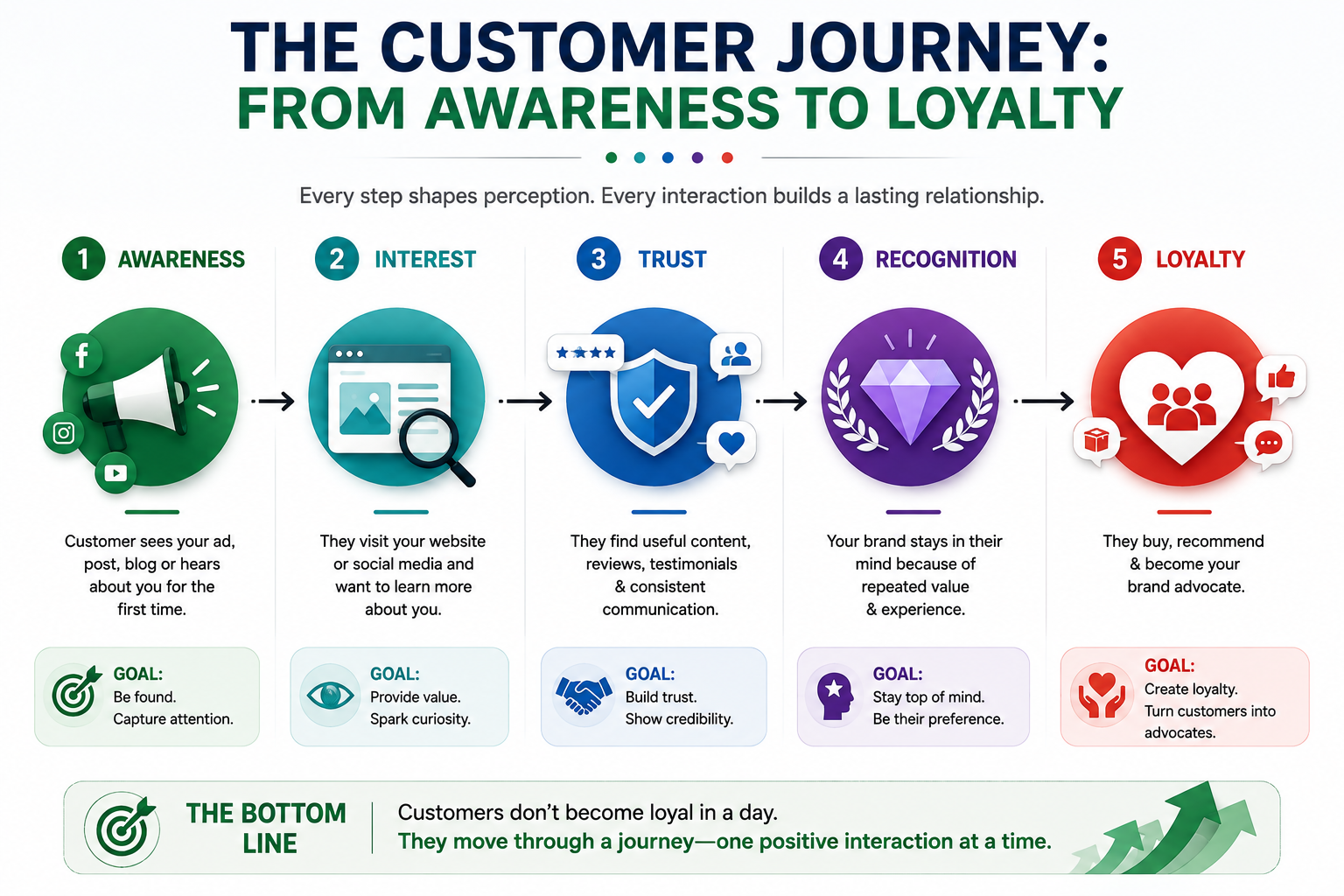
Over time, all these tiny elements combine to create familiarity which builds trust that eventually turns into sales.
Why Brand Recognition Matters More Than Ever
Today's customer sees thousands of advertisements every single day.
Social media posts.
YouTube ads.
WhatsApp promotions.
Emails.
Google Ads.
Billboards.
Newspapers.
Television.
In such a crowded marketplace, people rarely remember businesses that appear inconsistent.
The businesses people remember are the ones that repeatedly show up with the same identity, message, and customer experience everywhere.
Brand recognition isn't just about looking professional—it directly impacts:
- Customer trust
- Lead generation
- Conversion rates
- Referral marketing
- Customer loyalty
- Premium pricing
- Business valuation
People prefer buying from businesses they recognize over businesses they've never heard of.
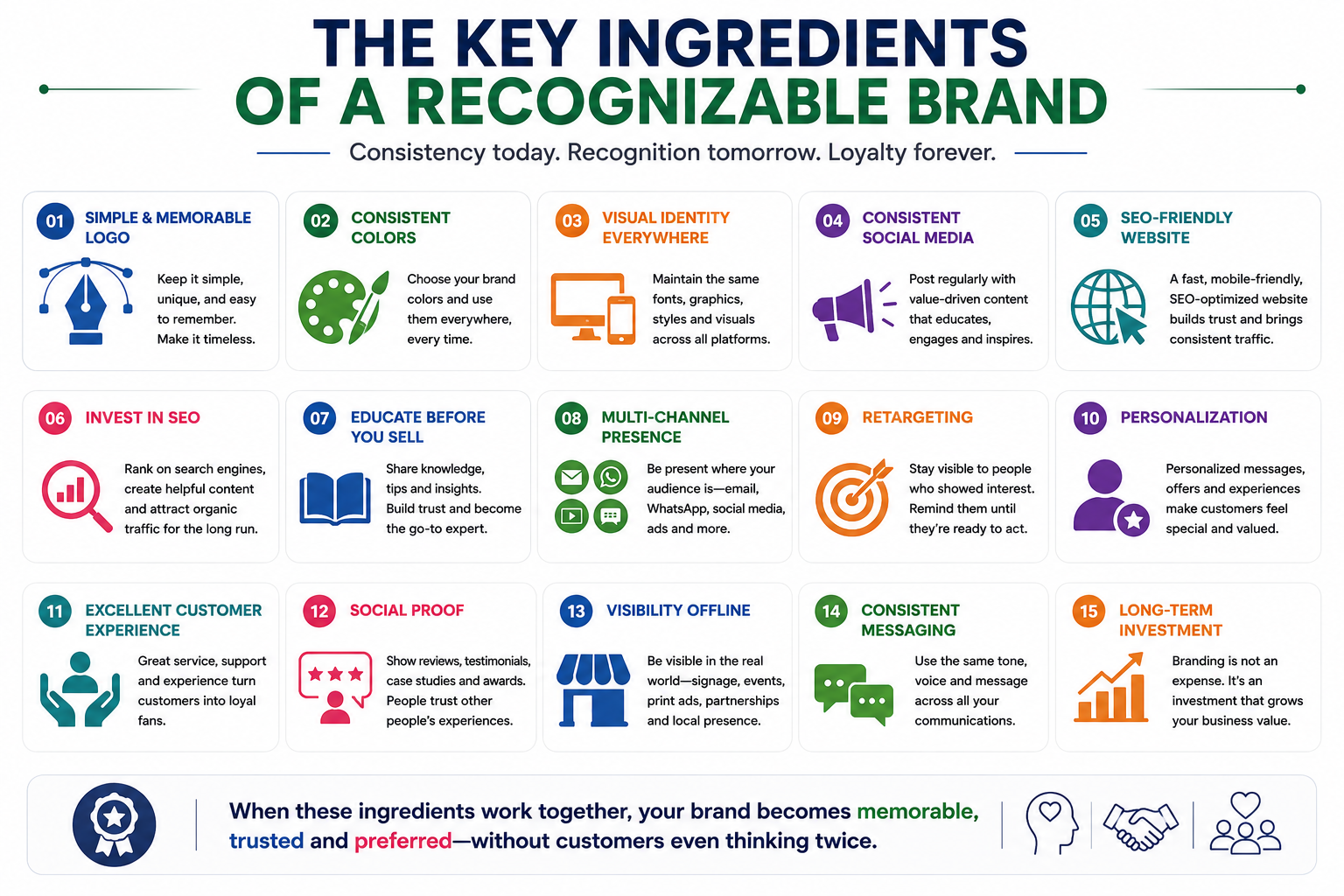
1. Start With a Simple Yet Memorable Logo
One of the biggest misconceptions is that a logo alone creates a brand. It doesn't. But it certainly starts the journey.
The best logos are:
- Minimal
- Easy to recognize
- Scalable
- Timeless
- Easy to remember
Notice how brands like Nike or Apple don't rely on complicated designs. Their logos are clean, simple, and instantly recognizable.
Your logo should work equally well on:
- Website
- Business card
- Invoice
- Mobile app
- Social media profile
- Product packaging
- Outdoor hoardings
- Newspaper advertisements
If your logo becomes difficult to identify when reduced in size, it's probably too complex.
2. Choose Brand Colors—and Never Keep Changing Them
Color is one of the strongest memory triggers. Imagine Coca-Cola suddenly changing its branding to purple.
It would feel strange. That's because our brains associate certain colors with certain brands.
Once you finalize your color palette, use it consistently across:
- Website
- Instagram
- Facebook
- LinkedIn
- YouTube
- Email newsletters
- Business cards
- Packaging
- Uniforms
- Office interiors
- Event stalls
- Hoardings
- Vehicle branding
Consistency creates familiarity which creates recognition.
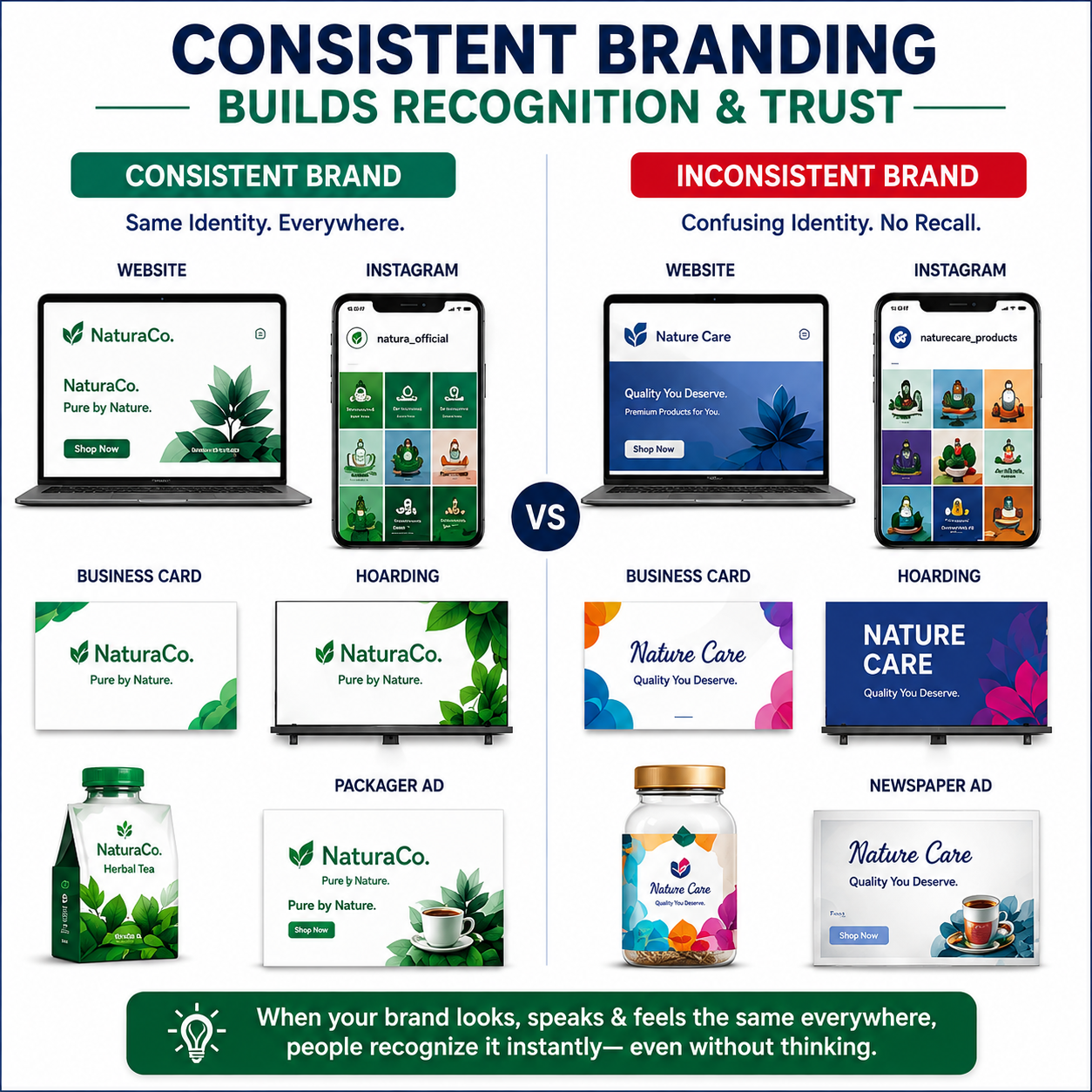
3. Maintain the Same Visual Identity Everywhere
Your audience shouldn't feel like they're looking at different companies when they visit your website, Instagram page, or LinkedIn profile. Everything should follow the same visual language.
This includes:
- Typography
- Photography style
- Icon style
- Graphics
- Video thumbnails
- Presentation templates
- Proposal designs
- Email signatures
Imagine meeting someone who changes their personality every single day. Would you trust them?
Brands work exactly the same way.
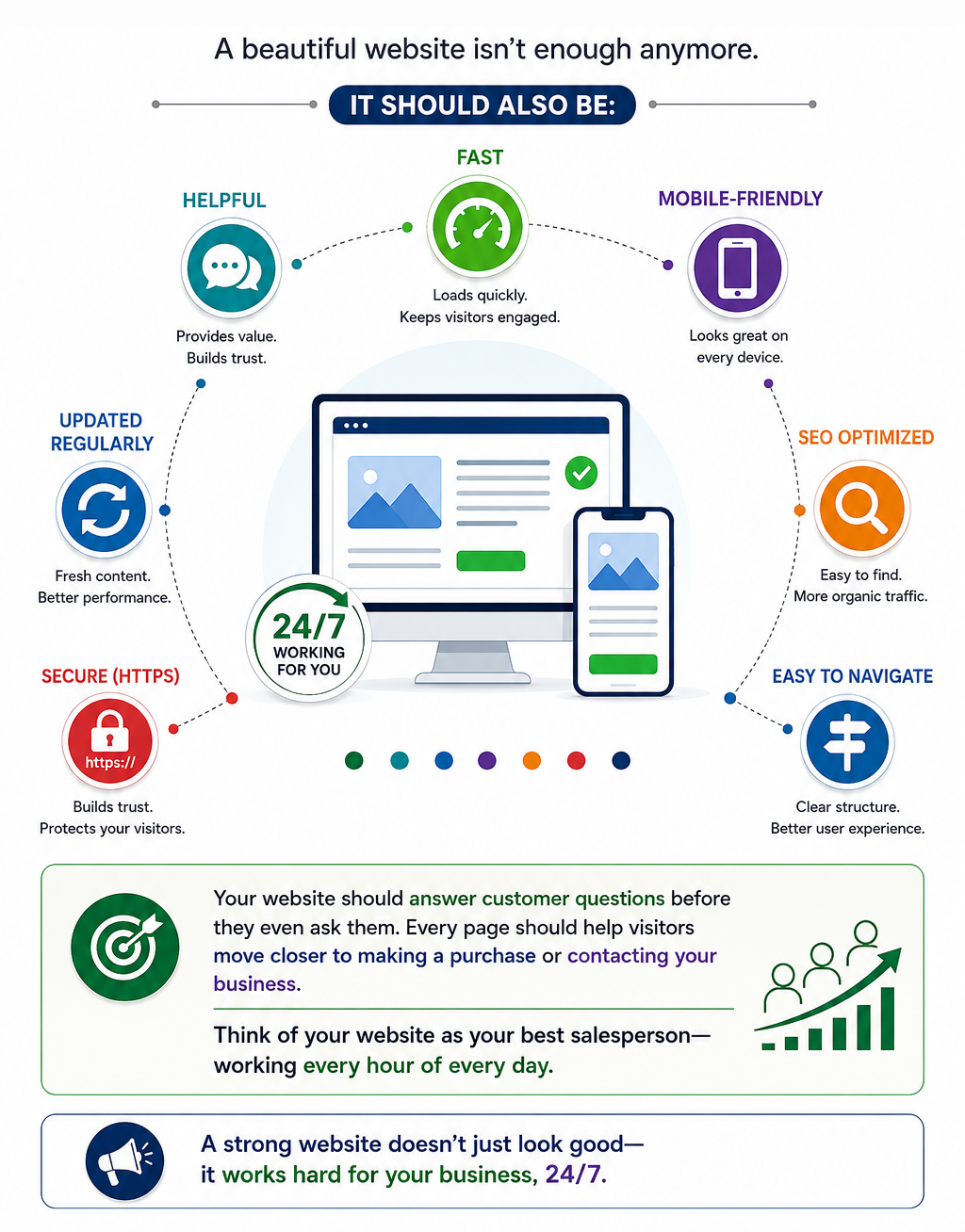
5. Build a Website That Works as Your 24/7 Salesperson
A beautiful website isn't enough anymore.
It should also be:
- Fast
- Mobile-friendly
- SEO optimized
- Easy to navigate
- Secure (HTTPS)
- Updated regularly
- Helpful
Your website should answer customer questions before they even ask them. Every page should help visitors move closer to making a purchase or contacting your business. Think of your website as your best salesperson—working every hour of every day.
6. Invest in SEO Instead of Chasing Only Paid Ads
Paid ads stop the moment your budget ends. SEO continues generating visitors for months or even years.
A strong SEO strategy includes:
- Keyword research
- Blog writing
- Internal linking
- Technical SEO
- Local SEO
- Optimized images
- Helpful content
- Fast page speed
Every blog you publish becomes another opportunity for potential customers to discover your business. Over time, this compounds into significant organic traffic.
7. Educate Before You Sell
The strongest brands aren't always the loudest. They're the most helpful. Instead of constantly promoting products, teach your audience.
For example: A dental clinic can publish articles about oral hygiene. A software company can create productivity guides. A digital marketing agency can explain SEO trends.
When customers learn from you, they begin trusting your expertise. Eventually, when they need your services, your brand is already top of mind.
8. Stay in Front of Customers Through Multiple Channels
Customers rarely purchase after seeing a business only once. Marketing experts often refer to repeated exposure as one of the drivers of brand recall.
Reach your audience through:
- Email newsletters
- SMS campaigns
- WhatsApp Business updates
- Push notifications
- Google Ads
- Meta Ads
- LinkedIn Ads
- YouTube
- Blogs
- Podcasts
Each interaction reinforces your brand.
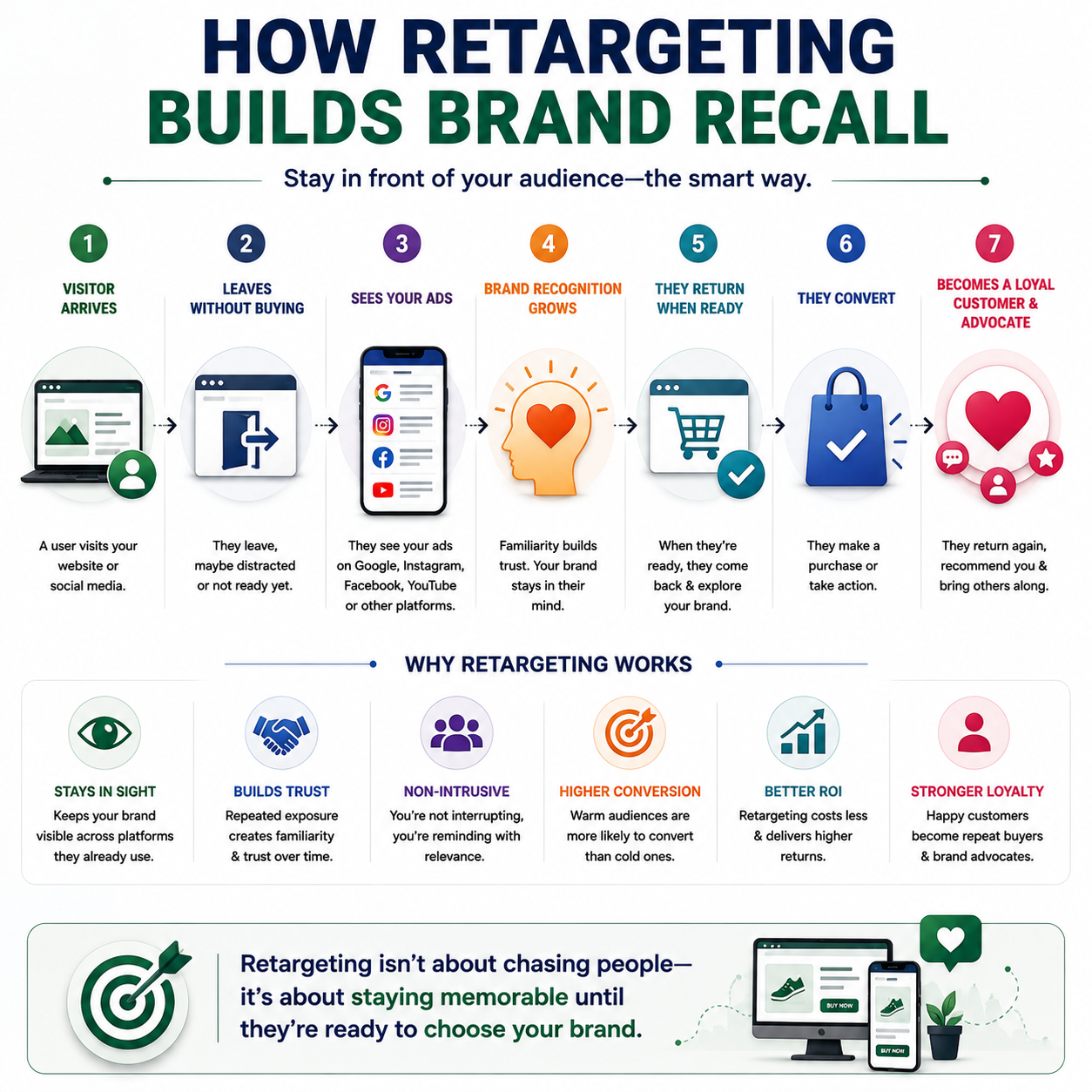
9. Use Retargeting to Stay Memorable
Imagine someone visits your website. They browse your services. Then they leave. Most businesses lose them forever.
Smart businesses don't. They retarget those visitors through advertisements. Later that day, the visitor sees your ad on Instagram.
Then on Facebook. Then while reading the news.
This isn't annoying when done thoughtfully—it's a reminder that often helps customers return when they're ready to buy.
Retargeting often delivers some of the highest returns because it focuses on people who have already shown interest.
10. Personalization Makes Customers Feel Valued
People don't want generic marketing anymore. They want relevance.
Examples include:
- Birthday discounts
- Anniversary wishes
- Product recommendations
- Region-specific offers
- Loyalty rewards
- Personalized emails
- Exclusive WhatsApp offers
A customer who feels remembered is much more likely to return.
11. Customer Experience Is Part of Your Brand
Branding doesn't end after someone makes a purchase.
It continues through:
- Delivery experience
- Customer support
- Packaging
- Follow-up communication
- Complaint handling
- Refund process
A great experience creates positive word-of-mouth marketing. A poor experience can undo months of advertising.
12. Build Trust Through Social Proof
People trust other customers more than advertisements.
Include:
- Google reviews
- Video testimonials
- Client success stories
- Case studies
- Awards
- Certifications
- Media mentions
When potential customers see that others have had positive experiences, choosing your business becomes much easier.
13. Be Visible Offline Too
Digital branding is powerful, but don't overlook the physical world.
Offline visibility can include:
- Store signage
- Vehicle branding
- Uniforms
- Exhibition booths
- Newspaper ads
- Local sponsorships
- Brochures
- Product packaging
- Community events
When your offline branding matches your online identity, recognition grows even faster.
14. Keep Your Message Consistent
Your brand voice matters as much as your logo. If your website sounds professional but your Instagram feels completely different, customers may struggle to understand your identity.
Decide your personality. Friendly? Professional? Luxury? Innovative? Playful? Then use that same voice everywhere.
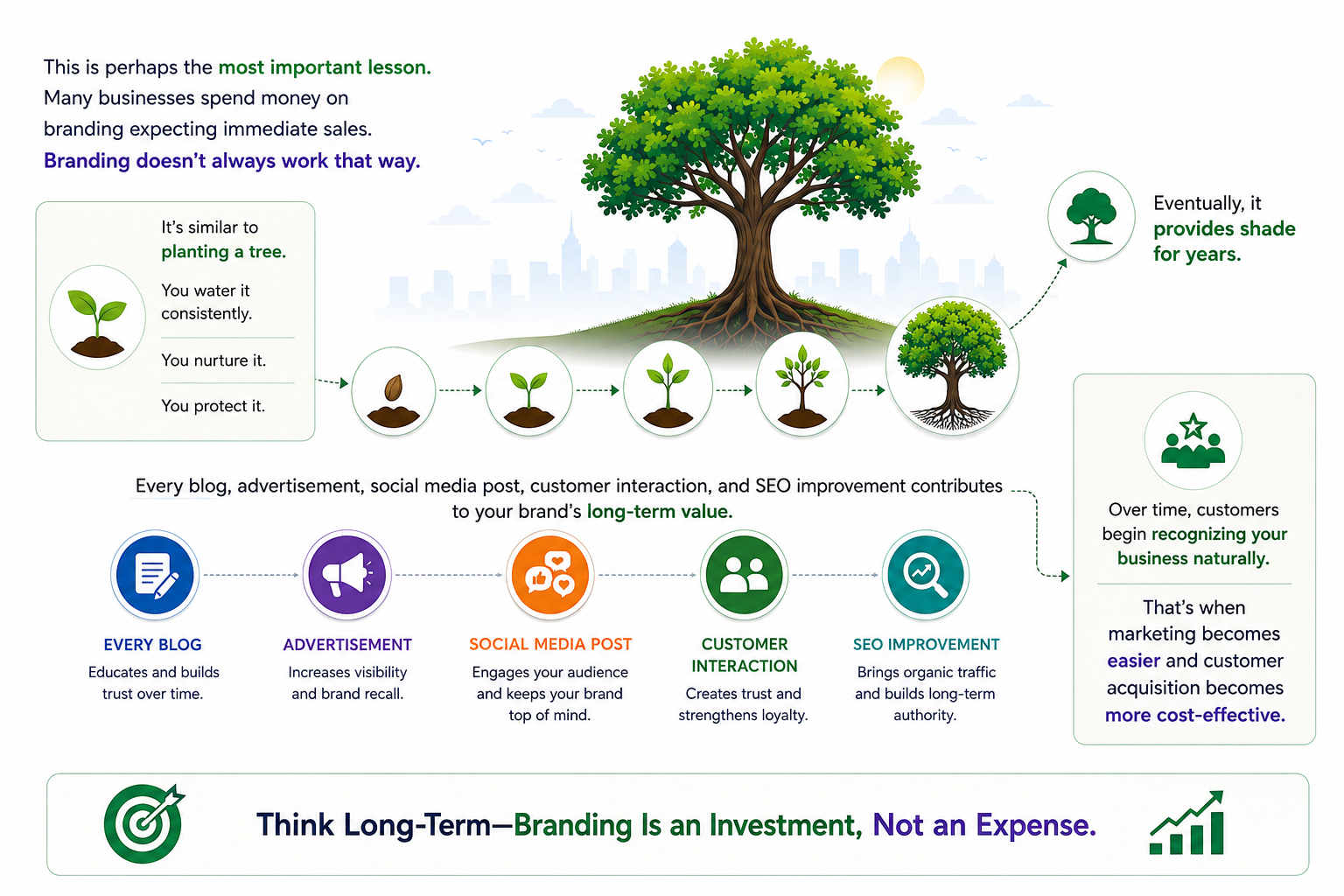
15. Think Long-Term—Branding Is an Investment, Not an Expense
This is perhaps the most important lesson. Many businesses spend money on branding expecting immediate sales.
Branding doesn't always work that way. It's similar to planting a tree. You water it consistently. You nurture it.
You protect it. Eventually, it provides shade for years.
Every blog, advertisement, social media post, customer interaction, and SEO improvement contributes to your brand's long-term value.
Over time, customers begin recognizing your business naturally. That's when marketing becomes easier and customer acquisition becomes more cost-effective.
A Simple Real-World Example
Imagine two local cafés.
Café A changes its logo every year, posts irregularly, has an outdated website, uses different colors on every banner, and rarely responds to customer reviews.
Café B uses the same logo, consistent colors, posts engaging content every week, shares customer stories, updates seasonal menus on its website, appears in local search results, sends loyalty offers through WhatsApp, and welcomes feedback.
A year later, which café are people more likely to remember and recommend? Most people would choose Café B.
Not because it necessarily serves better coffee, but because it consistently showed up with the same identity and built trust over time.
Final Thoughts
Building a recognizable brand isn't about having the biggest advertising budget or the fanciest logo. It's about creating a cohesive experience that people encounter repeatedly—whether they're browsing your website, scrolling through social media, receiving a WhatsApp update, walking past a billboard, or speaking with your support team.
Every interaction is a branding opportunity.
When your logo, colors, messaging, website, content, customer service, and marketing all work together, your business gradually earns a place in your audience's memory. Eventually, people don't just recognize your brand—they trust it, recommend it, and choose it over competitors.
If there's one takeaway from this article, it's this:
Brand recognition is built through consistency, trust, and long-term commitment—not by one viral post or one successful advertising campaign.
The businesses that treat branding as a continuous investment rather than a one-time project are the ones that remain memorable for years to come.
If you want to build a brand that people recognize and trust, Request a Quote today or Get in Touch!














 Related Articles :




4. Post Consistently on Social Media
Many businesses post for two weeks, disappear for three months, then suddenly start posting again. Customers notice this. Instead, successful brands create a content rhythm. They educate, entertain, inform, inspire and sell—but not constantly.
A healthy content mix includes:
People buy from brands they regularly see.